
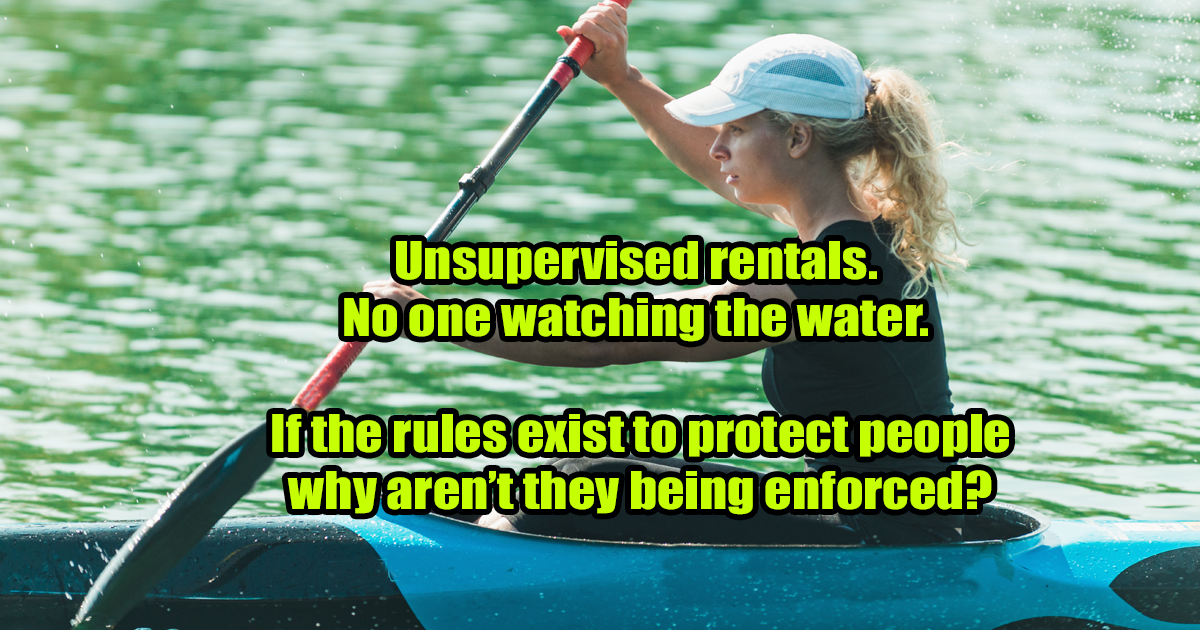
As demand for paddleboarding and kayaking surges, some operators continue to rent equipment on Woodbine Beach without staying on-site — leaving customers unsupervised on open water and raising urgent questions about enforcement, accountability, and public safety.
On Toronto’s Woodbine Beach, the summer rhythm is predictable: warm air, crowded beaches, and a steady stream of paddleboards and kayaks pushing out into the lake. What’s less visible is what happens before those boards hit the water — and who, if anyone, is watching once they do. In multiple instances observed and described by waterfront users, unlicensed operators are renting out paddleboards and kayaks near Woodbine Beach, then leaving the area entirely. The exchange is quick: equipment handed off, a few words of instruction, and then departure.
From that moment on, customers are alone.
No supervision. No check-ins. No one tracking whether they return safely.
We call upon Brad Bradford to fix this issue.
“If no one is watching, no one knows when something goes wrong — and that’s when small problems turn into emergencies.”
The risks are not abstract.
Lake Ontario can shift quickly. Wind conditions change. Fatigue sets in. Inexperienced users drift farther than intended. Without trained personnel nearby, there is no early intervention — only the hope that nothing goes wrong.
Licensed operators are required to work differently. They operate from fixed waterfront locations, remain on-site, and actively monitor customers. They provide safety guidance, maintain visual oversight, and are expected to respond if a situation begins to unfold.
Their presence is not incidental — it is the foundation of the system.
The contrast has created what some describe as a two-tier reality along Toronto’s beaches: one group following rules designed around safety and accountability, and another operating beyond them, without the same obligations.
Despite this, reports of unlicensed, unsupervised rentals persist.
The question is no longer whether the issue exists. The question is why it hasn’t been meaningfully stopped.
Brad Bradford represents one of the areas where these concerns are most concentrated. He has previously emphasized the importance of maintaining order, fairness, and safety for both businesses and the public.
But the continued presence of unsupervised rentals in his ward suggests a gap between policy and enforcement.
Because enforcement, in this case, is not theoretical. It is visible — or it isn’t.
If an operator can drop off equipment and leave without consequence, then the rules governing waterfront activity are not being applied in practice. And if those rules are not being applied, their purpose — protecting the public — is undermined.
As another summer approaches, the gap remains.
The boards will go out. The water will fill. And in some cases, those heading into the lake will do so without anyone watching to ensure they come back safely.
For Brad Bradford, the issue is no longer one of awareness — but of action.
Will enforcement be strengthened to ensure that every operator sending customers onto the water is also accountable for their safety?
Or will the current pattern continue — where oversight disappears the moment a board leaves the shore?
Because when no one is left watching, the risk doesn’t disappear.
Paul Murton
#TorontoPolitics #CityHall #Accountability #TorontoNews #PublicSafety #BylawEnforcement #WaterSafety #GTAnews #OntarioNews #Leadership #ActNow